Description
Onion Quercetin Jelly
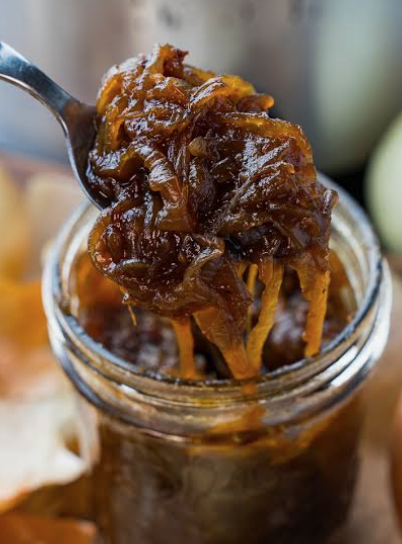
A sweet and savoury onion jelly with a place in our Living Ground microbiome protocol. We use it to bring quercetin, a naturally occurring plant compound found in onions, into everyday meals.
What is quercetin?
Quercetin belongs to a family of plant compounds called flavonoids. Plants produce these compounds as part of their relationship with their environment, helping them respond to sunlight and other stresses. When we eat plant foods, these compounds become part of our own biological world, interacting with our digestion, metabolism and gut microbes.
Quercetin has been studied for its antioxidant activity and its influence on the pathways involved in inflammation and immune responses. Researchers are also exploring its relationship with the intestinal barrier, the layer of cells and mucus that allows us to absorb nourishment while maintaining a boundary between the contents of the gut and the rest of the body. These are areas of ongoing research, with much of the mechanistic evidence coming from laboratory and animal studies.
Why we include it in our microbiome protocol
Our approach begins with nourishing the inner food web. Gut microbes interact with the fibres, starches and plant compounds in our meals, and different organisms carry out different jobs. Certain gut bacteria can break down quercetin into smaller compounds called metabolites. The effects of a plant food therefore depend partly on the microbes present and the transformations they perform.
There is also cooperation between these organisms. In laboratory research, bacteria that digest starch have been shown to release sugars that help other bacteria process quercetin and produce butyrate. Butyrate is a short-chain fatty acid used as fuel by the cells lining the colon. This research gives us a useful glimpse into how plant compounds, carbohydrates and microbial relationships work together.
We include onion quercetin jelly as one part of a varied food protocol, alongside fermented foods, vegetables, herbs, broths and cooked-and-cooled starches. Each brings different ingredients to the meal. The aim is to create a varied diet that supports the conditions in which our inner microbial community lives.
From the soil food web to the inner garden
In living soil, microbes transform organic material and share the products of their work through the soil food web. A similar principle of transformation and exchange operates within the human gut. The plants grown in our gardens bring compounds into our meals that our intestinal microbes can continue to transform. Onion quercetin jelly is a delicious way to bring that connection to the table.
Serve a spoonful with eggs, cheese, roasted vegetables or meats, add it to a sandwich, or enjoy it with a colourful garden plate. It brings sweetness, savoury flavour and another layer of plant diversity to everyday eating.