Living Ground • Southern Ecuador
I am a Soil Food Web Consultant and studied with Dr. Elaine Ingham. What I learned through that training changed the way I looked at soil, plants, food and ultimately health. I have taken that knowledge out of the classroom and applied it here at the Living Ground Project, where we are rebuilding land by working with the biology that makes soil alive.
This workshop is not really about compost. Yes, we are going to make a beautiful microbe-rich compost together, but compost is simply one way we can grow and deliver biology. This workshop is about the microbes.
I want you to understand what is happening in that miniature world beneath your feet. Soil is alive with bacteria, fungi, protozoa, nematodes and an extraordinary network of relationships. When that biology is present and functioning, plants have access to nutrients, soil structure changes, water behaves differently and the entire growing system begins to work differently.
Beyond Organics
This takes us beyond organics. We can grow organically and still have biologically depleted soil. We can add organic matter and amendments and still not understand what is happening around the roots. The Soil Food Web gives us another way of looking at growing. We begin asking what biology is present, what is missing, what the plant needs and how we can encourage the organisms that help create the conditions for that plant to thrive.
You will learn how to grow, enhance and encourage microbial populations and how to bring that biology back into the soil. This is about understanding the living system, not simply adding another product or following another recipe.
Seeing the Microbial World
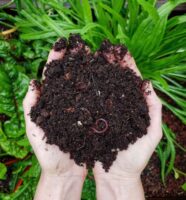
You will learn how to use a microscope to enter this miniature world and begin identifying what is living in your soil and compost. There is something quite remarkable about taking what looks like a handful of ordinary soil, preparing a tiny sample and suddenly seeing an entire community moving around in front of you.
But seeing microbes is only the beginning. I want you to learn how to assess what you are seeing. Is the biology diverse? Are there good populations of bacteria? Do we have the fungal component we need? Are protozoa and nematodes present? What does the balance tell us, and what might be happening in the soil when a plant is struggling?
Assess, Troubleshoot and Apply
This is where the science becomes practical. We will learn how to assess the biology, troubleshoot what may be missing or out of balance and then decide how to respond. You will learn how to take what you are seeing under the microscope and use that information to make better decisions in the garden, on a farm or anywhere you are working with soil.
We will make a microbe-rich compost together and examine it under the microscope so you begin to understand what you are creating, not simply follow a compost recipe. We will work directly with the biology and look at practical ways to increase and encourage the microbial life we want in the soil.
This is the part of Soil Food Web science that excites me. You are not just being told that microbes are important. You get to see them. You begin to recognize them, understand what they are doing and make decisions based upon the biology that is actually there.
From Soil to Us
For me, the Soil Food Web belongs to a much larger conversation about health. We have spent a tremendous amount of time thinking about plants, animals and humans as separate from the microbial world, yet microbes are woven through the entire process.
The microbial relationships around plant roots influence how nutrients are cycled and made available to the plant. Those plants become our food, and the microbial world continues through our own human microbiome and terrain. The soil biome feeds the plant, the plant feeds us, and the health of each part influences the next.
This is why I believe the future of growing food has to move beyond simply asking what we can add to the soil. We need to begin asking who is living there.
What You Will Learn
- How the Soil Food Web works and why microbial relationships matter
- How bacteria, fungi, protozoa and nematodes function within living soil
- How plants interact with microbes around their roots
- How microbes influence nutrient cycling and plant health
- How to prepare soil and compost samples for microscope observation
- How to use a microscope to identify important microbial groups
- How to assess the biological balance within a soil sample
- How to recognize when important microbial groups are missing or depleted
- How to troubleshoot soil from a biological perspective
- How to grow, enhance and encourage beneficial microbial populations
- How to make a microbe-rich compost
- How to examine compost biologically rather than judging it only by appearance
- How to apply microbial biology back to the land
- How Soil Food Web science can take growing beyond organics
- How the soil biome connects with plant nutrition and the human microbiome
Get Your Hands Dirty
This is a hands-on workshop. We will be outside working with soil, collecting samples, making compost, looking through microscopes and applying what we learn here at Living Ground. I want you involved in the process because understanding microbes becomes very different once you can actually see and work with them.
And yes, I hope you leave here awesomely infected with great microbes.
Learning at Living Ground
Living Ground has become a place where I can apply what I have learned and watch what happens over time. The property gives us a living classroom where we can work with real soil, real plants and real problems rather than learning only from slides or theory.
I don’t want you to leave knowing a collection of Soil Food Web terms. I want you to leave able to walk onto your own garden, farm or property and begin looking at it differently. I want you to know how to assess what is happening, troubleshoot problems, encourage the biology you need and begin rebuilding soil from the microbial level up.
Workshop Pricing
The Soil Food Web Workshop is $2,000 per person.
For those staying offsite, lunch, snacks and drinks during workshop days are $15 per day.
If you would like to stay with us at Living Ground during the workshop, you can make it a complete experience with your accommodation and meals included.
Workshop + Shared Room + All Meals
$2,525
Workshop + Private Room + All Meals
$2,630
The onsite packages include your accommodation at Living Ground and breakfast, lunch and dinner at the Gratitude Café throughout the workshop. You will also have access to our offerings at Living Ground, including the gardens, spa, sauna, yoga space and the property itself.
A Special Collaboration with Elizabeth Wysen
There is another reason you may want to come a little earlier.
Elizabeth Wysen will be holding her retreat here at Living Ground immediately before the Soil Food Web Workshop. We have purposefully put these experiences together, giving you the opportunity to spend more time here and explore very different aspects of health, healing and our relationship with the living world.
Elizabeth’s work focuses on the spiritual and emotional aspects of healing, while my workshop takes us outside and into the soil, the microbial world, the Soil Food Web and the biological foundation beneath our food and health.
You do not have to attend both. You are very welcome to come only for the Soil Food Web Workshop.
If you would like to experience the complete program with both Elizabeth and me, the full package pricing is:
Offsite + Lunches, Snacks and Drinks
$4,150
Both Workshops + Shared Room + All Meals
$4,825
Both Workshops + Private Room + All Meals
$4,990
You can learn more about Elizabeth’s retreat and register for her portion directly with her.
Ready to Join Us?
If you are ready to participate, you can apply for one of the upcoming Soil Food Web workshops. If you have questions or would like more information first, please get in touch.
Reserve Your Place
A $500 deposit is required to reserve your place. The deposit is the same for all workshop and accommodation packages and is applied toward your total fee.
Wire Transfer
Wire transfer is our preferred method for making your deposit.
Banco de Loja
Beneficiary Bank Address
Rocafuerte and Bolívar, corner
City and Country
Loja, Ecuador
Telephone
073701600
SWIFT Code
LOJBECEL
Beneficiary Name
Leisha Maria Giddings
Account Number
2901369219
Identification / Cédula
1151734553
PayPal
PayPal is also available. A 5% processing fee is added when using PayPal.
Contact me if you would like to make your deposit through PayPal and I will send you the payment information.
The remainder of your workshop and accommodation fee can be paid by wire transfer before you arrive or in cash when you are here. We prefer wire transfer and cash whenever possible.
Need information or have questions about your deposit?
EMAIL LEISHA