Description
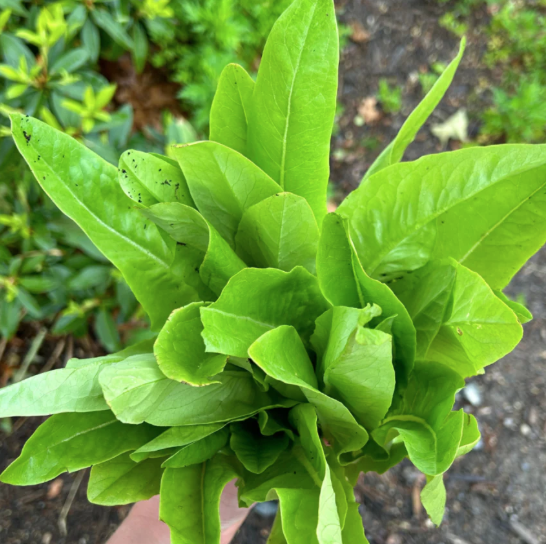
This striking heirloom lettuce is easy to recognize by its unique triangular leaves that resemble a deer’s tongue. Unlike tightly headed lettuces, it grows upward in a loose rosette on a central stalk, producing abundant tender leaves that are crisp at the base and buttery toward the tips. The flavor is full and nutty, making it ideal for fresh salads, sandwiches, or as a bed for warm dishes.
First grown in the 1840s, Amish Deer Tongue has been treasured by gardeners for its resilience. It tolerates a wide range of soils, resists bolting in warmer weather, and produces steadily throughout the season. Each leaf tells the story of an older way of growing—before industrial agriculture narrowed our choices.
In the soil, this lettuce thrives when surrounded by a living community of microbes. Its roots feed soil bacteria and fungi, which in turn deliver nutrients and water back to the plant. A microbe-rich soil not only creates stronger plants but also more nutrient-dense food for us. By growing and eating this variety, we participate in a cycle that links soil health, plant vitality, and human nourishment.
Esta lechuga reliquia se reconoce fácilmente por sus hojas triangulares que recuerdan a la lengua de un venado. A diferencia de las lechugas compactas, crece en forma de roseta suelta sobre un tallo central, produciendo abundantes hojas tiernas que son crujientes en la base y suaves hacia la punta. Su sabor es lleno y ligeramente a nuez, ideal para ensaladas frescas, sándwiches o como base para platos calientes.
Cultivada desde la década de 1840, la Amish Deer Tongue ha sido apreciada por los horticultores por su resistencia. Tolera diferentes tipos de suelo, resiste el espigado en climas cálidos y produce de manera constante durante la temporada. Cada hoja cuenta la historia de una forma más antigua de cultivar, antes de que la agricultura industrial redujera nuestra diversidad alimentaria.
En el suelo, esta lechuga prospera cuando está rodeada de una comunidad viva de microbios. Sus raíces alimentan bacterias y hongos beneficiosos, que a su vez devuelven nutrientes y agua a la planta. Un suelo rico en vida no solo crea plantas más fuertes, sino también alimentos más nutritivos para nosotros. Al cultivar y consumir esta variedad, participamos en un ciclo que une la salud del suelo, la vitalidad de las plantas y nuestra propia nutrición.

Reviews
There are no reviews yet.