Description
Every drop of blood tells a story.
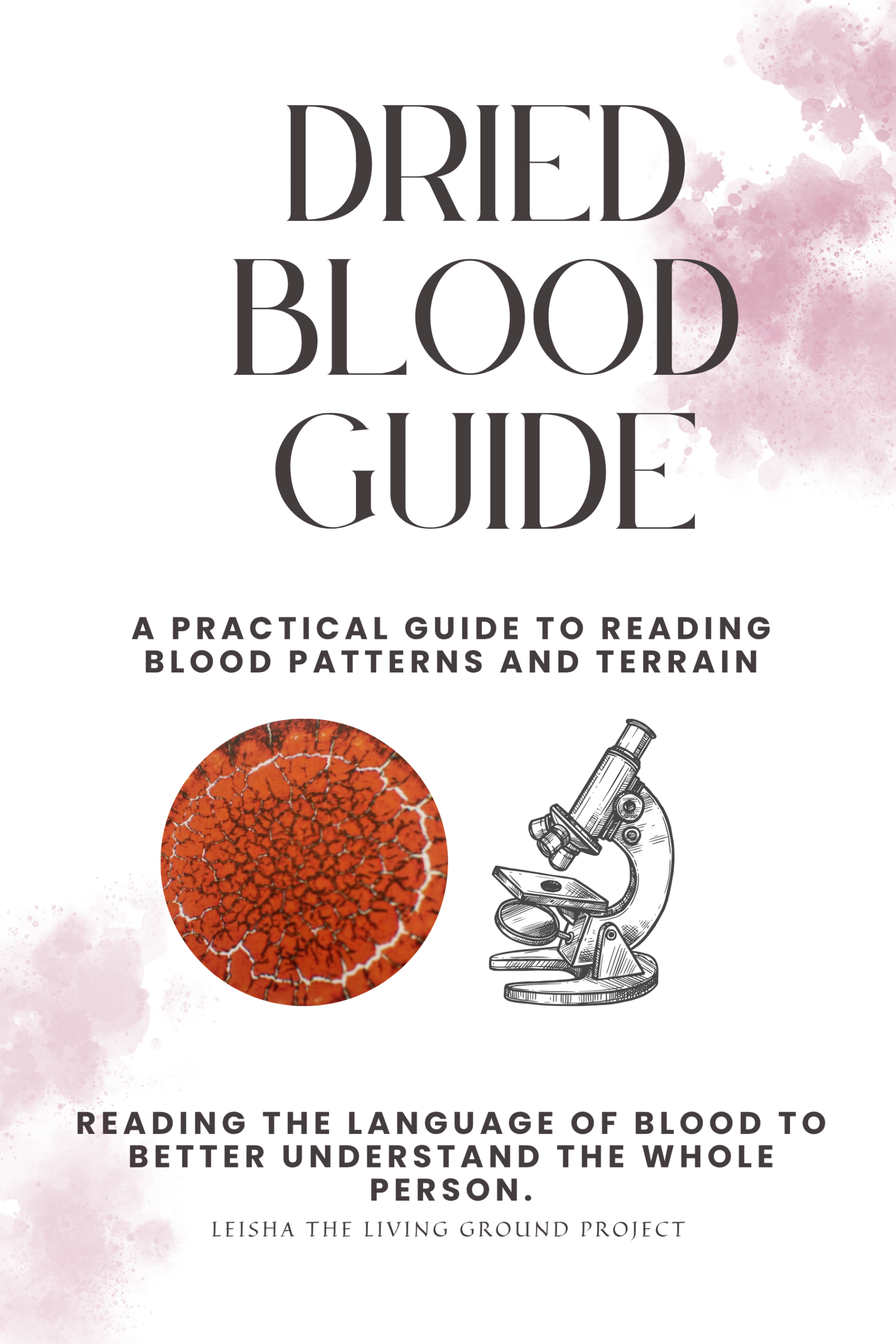
When a drop of blood dries naturally on a microscope slide, it forms intricate patterns that reflect the body’s internal terrain. For decades, practitioners have observed these patterns as another way to understand health, adaptation, and the body’s remarkable ability to respond to stress. Dried Blood Analysis offers a practical approach to learning this fascinating method of observation.
This book introduces readers to the principles of terrain medicine and teaches a systematic method for examining dried blood blots. Rather than focusing on isolated markers or attempting to diagnose disease, it encourages careful observation, pattern recognition, and an appreciation for the body as an interconnected living system.
Inside, you will learn:
- The science behind how a drop of blood dries and forms recognizable patterns
- The foundations of Terrain Theory and why the body’s environment matters as much as its individual parts
- How to prepare, photograph, and examine dried blood samples
- The anatomy of a dried blood blot, including zones, concentric rings, colour changes, crystals, fibrin patterns, cracks, and other structural features
- How to recognize patterns associated with digestive stress, adrenal stress, inflammation, oxidative stress, liver congestion, kidney stress, connective tissue changes, immune activity, and other common terrain imbalances
- The difference between similar-looking markers and how to avoid common interpretation mistakes
- How Ayurveda and the Seven Dhatus can deepen the understanding of terrain and biological adaptation
- Practical guidance developed through thousands of observations under the microscope
Throughout the book, Leisha shares insights gained from years of studying dried blood patterns while working with people seeking to better understand their health. Her approach combines careful observation with the broader principles of terrain medicine, nutrition, lifestyle, and traditional healing systems.
Dried Blood Analysis is not intended to replace conventional laboratory testing or medical diagnosis. Instead, it offers another way of observing the body—one that recognizes health as a dynamic process shaped by resilience, environment, nourishment, and the body’s ongoing ability to adapt.
Whether you are a practitioner, student, natural health professional, or simply curious about the language hidden within a single drop of blood, this book provides a thoughtful introduction to one of the most intriguing observational tools in terrain-based health care.
More than a manual of blood patterns, this is a guide to seeing the body differently. It invites readers to slow down, observe carefully, ask better questions, and appreciate the remarkable intelligence of the human body.