In the face of change, many of us feel a sense of helplessness, convinced that the magnitude of the environmental and collective crisis is beyond our individual reach. We observe the vastness of Nature, the intricate web of ecosystems, and the relentless forces of nature, and wonder if our actions can truly make a difference.   One thing that is certain is everything is connected and separating them is a futile and harmful attempt at healing.

In the vastness lies a profound and simple truth: the microcosm reflects the macrocosm. Just as the intricate image of a cell or microbe mirrors the grand structures of mountains and atmosphere, our individual actions, when aligned with a shared vision, have the power to transform our world.   What is our shared mission?   We all live here, together so I would imagine health is important for all.

However, the headline news has a negative impact that leaves many feeling hopeless in the middle of all the crisises.   Perhaps the call to action is not to change the world in its entirety, but to change the little worlds we inhabit.   It is to transform our homes and land into havens of sustainability and our communities into hubs of environmental consciousness. 

This transformation begins with a simple yet profound shift: a commitment to non-harm. We must recognize that our actions, from the products we consume to the energy we use, have ripple effects throughout the planet. By embracing a philosophy of non-harm, we minimize our ecological footprint and create space for the Earth’s natural systems to heal.

Let’s step back and take a look at the reality of our systems and how we approach life.   I hope this offers some thought provoking consideration.  Alternative healthcare and organic soil practices often mimic the industrial world’s approach of eradicating “bad guys”.    While it’s undoubtedly true that using natural products is generally preferable to using chemicals, it’s important to recognize that both approaches share a similar underlying mindset of control and manipulation while ignoring the “terrain”

In conventional medicine, the focus is often on identifying and eliminating pathogens or suppressing symptoms. Similarly, in conventional agriculture, the focus is on removing pests and weeds, creating a sterile environment for crops to grow. While these approaches may have short-term benefits, they can also have unintended consequences.

For instance, excessive use of antibiotics in both human medicine and animal agriculture has contributed to the rise of antibiotic-resistant bacteria, a major public health threat. Similarly, the widespread use of herbicides and pesticides in agriculture has led to environmental contamination and the decline of beneficial insects and microorganisms.   Look at alternative (herbs and food) use in human and soil health?  Is the approach any different?

The soil, the very foundation upon which life flourishes, holds the key to this transformation.   All we have to do is observe the microbes.  As we nurture and replenish the soil (the microbes) we not only enhance food production and restore ecosystems but also mitigate climate change.  From the tiniest creatures to the grandest ecosystems, life is an intricate dance of interconnectedness.

Microbe compost, a symphony of microorganisms, mirrors this profound connection, offering a glimpse into the healing power of nature’s smallest beings. In every drop of compost tea lies a universe of potential, ready to revitalize the soil, the foundation upon which life thrives.     It is a science, for sure.   And, we use our microscope to observe the life in our compost.   This is our tool!  Science, with its pursuit of knowledge and understanding, plays a crucial role in this transformation. By asking the right questions, seeking answers, and sharing insights, we illuminate the complex connections between our actions and the planet’s health.

When we view the Earth not as something to be saved but as a living, self-regulating system, we adopt a more harmonious relationship with our planet. We recognize that our well-being is inextricably linked to the well-being of all living things.   Organisms regulate climate through intricate feedback loops and interactions. Plants, through photosynthesis, absorb carbon dioxide from the atmosphere, while forests, acting as sponges, absorb and regulate water flow. Microorganisms in the soil play a vital role in carbon sequestration, trapping carbon and preventing its release back into the atmosphere.

We stand on the solution, not as saviors of the planet, but as integral parts of its intricate web of life. By nurturing the soil, embracing sustainable practices, and aligning our actions with the Earth’s natural rhythms, we can transform our little worlds and, in doing so, contribute to a collective healing of our planet.

Plants need rain, and rain needs plants. This simple yet profound interdependence highlights the interconnectedness of life on Earth. As we care for the soil, we nurture the plants, and in turn, the plants sustain the water cycle, creating a regenerative system that supports life.

Our individual actions, like ripples in a pond, have the potential to create waves of change. By changing our little worlds, we can collectively transform our planet, one step, one action, at a time. 

.Iit is to the soil, the humble cradle of life, that we ultimately return.  We come from the water of our mother’s womb and enter an intricate dance with earth.  So why do  we distance ourselves from the soil.   Isn’t this severing the thread of kinship that binds us to each other and all life.. Alienation, a malady of modern society, stems from this disconnect, a detachment from the microbial symphony that orchestrates life’s grand performance.   The soil, far from being a mere expanse of dirt, is a teeming metropolis of life, a vibrant tapestry of microorganisms that play a pivotal role in our existence.   Somehow getting “dirty” is bad for us!     No so!   These microscopic friends, are the  heroes of our life and health: the architects of nutrient cycles, the guardians of soil health, and the custodians of our very survival.

By reconnecting with the soil, by immersing ourselves in its rich microbial tapestry, we not only nourish the earth but also nurture our own well-being. We rediscover our place within the intricate web of life, recognizing our interdependence with the very ground upon which we stand.

it is in the soil that our truest essence lies. Let us honor the microbial symphony that sustains us, and in doing so, rediscover the profound connection that binds us to our planet, our home.  And, that is why we are making Microbe Compost and creating an education center to teach about self reliance and sufficiency!   

Are you called to be a part of this change of hope?   Living Ground is entering a special phase of creation building from the ground up with all our might and using our brains and hands to lift the project.    If you are called to support this work, please contact us.    This is a collective endeavor.   And, yes, we are selling our microbe complete compost…let’s spread the microbes.


Like many places in the world, our local area has experience and rash of crazy and intense fires threatening the living ground of our nature and soil.  Prevention work is important.   

One local solution is to pipe waters from our local national forest, the Podocarpus.   Living Ground feels that the solution to the fires is not to pump more water out of the rivers that are already low enough and barely support the local lands especially in a situation of drought.     This is a temporary fix that mainly addresses areas where there could be a potential fire in the future and in the long term, it will create more problems.

Why not look to Nature and how she works.   This solution is increasing the soil sponge and restoring the soil microbes.

As part of the Soil Food Web educational program, we were inroduced to Didi Pershouse.  Didi Pershouse stands as a prominent advocate and educator pioneering the work that revolves around the concept of the “soil sponge,” 

This concerpt is that healthy soil behaves much like a sponge.  The soil sponge metaphor conveys the following principles without the need for enumeration:

At its core, the soil sponge represents the capacity of well-nurtured soil to mimic the water-absorbing and holding properties of a sponge. It soaks up rainwater and irrigation, storing it within its structure, and gradually releases this moisture to nourish plants during drier periods.   What holds the water?   The microbe aggregates.

The soil sponge’s importance  extends to mitigating the impacts of fire or climate change by reducing the likelihood of both droughts and floods. In periods of drought, the soil sponge provides a reservoir of moisture that helps plants thrive even in arid conditions. During heavy rainfall, it prevents excess water from causing floods and erosion.  Double win!

A thriving soil sponge is synonymous with healthier and more resilient ecosystems. By ensuring a consistent water supply for plants, it promotes their growth and vitality.   This prevents fires.  The soil sponge’s effectiveness hinges on the soil’s organic matter content and the presence of beneficial microorganisms. Soils rich in organic matter and teeming with beneficial microbes exhibit a superior water-holding capacity, thus reinforcing their role as effective sponges.

Increasing the soil sponge means we stop tilling practices for minimal soil disturbance,.  It requires the incorporation of organic matter through microbe rich compost.   It requires cover cropping, and the avoidance of excessive chemical inputs. These practices are central to enhancing soil structure, increasing its water-holding capacity, and ensuring the long-term sustainability of nature.

Here in Ecuador we have rains for half a year and dry season the other  half.   This year the dry season seemed more like a drought.   There are two things that are very important to living soils to prevent fires escpecially in dry season or drought:

  • Increasing rainfall with tree/plant cover – increase biodiversity and biomass.  Yes, this is possible!
  • Keeping the grass greener  and longer due to larger water reserve with the soil sponge – types of grasses are important.

While we often think of plants as passive participants in the water cycle, they actually play an active role in influencing rainfall, thanks to a remarkable partnership with specific bacteria.

On the surface of plants, a unique group of bacteria live. These tiny microorganisms are more than just casual residents; they are major contributors to the complex process of rainfall. The bacteria reside within the stomata of leaves, those microscopic openings that plants use for gas exchange.  As these bacteria thrive in their leafy abode, they multiply. When conditions are right, these bacterial hitchhikers are released into the atmosphere, ready to play a crucial role in the formation of raindrops.   In the upper atmosphere, these bacteria become concentrated, leading to a transformation in raindrop dynamics. By interacting with other particles and moisture in the atmosphere, they aid in the coalescence of smaller water droplets into larger ones. This process results in raindrops growing heavy enough to overcome the force of gravity and fall to the Earth’s surface.

The significance of this microbial contribution to rainfall cannot be overstated. It reminds us that the natural world is a web of interconnected relationships, where even the tiniest beings can have a profound impact on the larger processes that shape our environment. So, the next time you witness a refreshing rain shower, remember to thank not only the clouds but also the microscopic bacteria that made it possible.

Soilution

When soil biodiversity is compromised, as indicated by Living Ground’s findings locally, it can have far-reaching consequences. The health of plants, animals, and even humans depends on the intricate relationships within the soil. Loss of diversity and fungal biomass can lead to soil degradation, reduced agricultural productivity, and increased vulnerability to soil erosion.

Reestablishing the soil microbiome is an essential step in addressing these challenges. Techniques like compost tea and extract applications, cover cropping, and reduced tillage can help restore microbial diversity and fungal biomass.   And, of course, education for our local residents especially about how fire destroys the soil microbes. These approaches not only benefit the soil but also promote healthier plant growth and enhance the overall resilience of ecosystems.

The reason the mountains are drying and fires are raging is multifaceted but it is ultimately a result of the management practices of the land over the last decades or century. The problem is endemic thus so should the solution be.  There are many areas in the world that have much much less rainfall than the Vilcabamba area and they are able to harvest it and make use of it all year long. The fires are not a symptom of a lack of rain; they represent the damage that has been done to the landscape. Bringing more water from outside sources (such as our precious National Podocarpus park) will not solve the problem, only temporarily hide the issue.

Improving soil aggregations

What is soil aggregation ?

Arrangement of primary soil particles (sand, silt, clay) around soil organic matter and through particle associations. This arrangement increases the amount of air space in the soil and offers room to store water.

Soil aggregation is directly related to the soil’s ability to hold water. The soil aggregating of the pastures in the mountains is extremely low and this greatly reduces its ability to capture and hold rainfall. So even if it does rain all that water washes down the hill into the river causing flooding and taking precious minerals with it. By improving soil aggregation we can help infiltrate water, this will help the grass remain greener longer and also provide the rivers with a slow release of water that can last through the dry season.  This is called the soil sponge.   This would help make the most out of each drop of water that we get over time and during the dry season

Encouraging Perennial Grasses

Because of the past cycle of fires the soil on the mountains has been damaged. High temperatures on the surface kill the biology living in the soil surface. This reduced biology encourages annual grasses that dry up in dry season and provide most of the fuel for the fires.    Perennial grasses invest more into the soil then Annual grasses simply because they have a long term strategy. They help improve soil aggregation through feeding the microbes if they are present.  Also, Perennial grasses are generally better and more nutritius feed for animals too.

Alejandro Carillo Chihuahua desert creates his own rain.
https://www.youtube.com/watch?v=ANZNt8LXM6o

Fungi in the Soils

Fungi or mushrooms are an integral part of the soils and major contributors to the aggregation of soil. They serve many functions to help against the fire.

Fungi play a major role in the improvement of soil. Their function is to create Macro aggregates.  Mycorrhizal fungi are major partners to plants and offer a host of benefits if they are present in the soil. These benefits include:

  • increased nutrient uptake (especially phosphorus and micro nutrients)
  • protection from diseases of the roots
  • they can provide water to the plant in case of drought.
  • Due to the improved nutrition the plants are more resilient to disease and are also more nutritious to the animals that graze them.

Fungi also provide another benefit to soils. A cubic centimeter of soil can contain as much as 1km of fungal strands. Fungal strands are very strong; some species can be as much as 17x stronger tension strengths than steel. This characteristic will help prevent landslide and erosion of the already thin soils of the mountains.

Water Harvesting

Rain water retention basins on top of mountains to collect water in the rainy season for use in the dry season is another good solution.  This can serve a double purpose to increase the productivity of the grazing grounds in the mountains as well as keep the grass green. 

This an Indian NGO that has a contest every year for villages to create the most water harvesting structures and results have been staggering. In a very short period of time they are able to restore their water cycle and go from deserted landscape to lush and productive agricultural land.

https://readtheshift.com/the-water-cup-%F0%9F%8F%86-how-a-competition-is-solving-indias-water-crisis/

Reforestation incentives
Planting trees at the top of the mountains to help increase soil aggregation increase water retention and provide a source for the rain causing bacteria. However, we also encourage you to watch this video that will challenge the current view of reforestation.    Perhaps we should observe how Nature does it as she has more experience than us humans  https://youtu.be/qW_opcoW8Ts?si=phMjZwcGNSgcZcWD


Conclusion

We believe that the money, effort and time required for any fire restoration project could be better used at restoring the soil and landscape.    Living Ground has the microbes and the ability to be a part of any restoration/rejuvenation project.  Living Ground’s commitment to sustainable landscaping and design extends beyond individual projects. Their work serves as a reminder of the critical importance of nurturing and revitalizing the soil microbiome in our local area and beyond. By doing so, we can contribute to the long-term health of our environment and ensure a more sustainable future for all.


Living Ground has been very busy working with clients to create their dream spaces.   We are creating sustainable landscapes and vibrant ecosystem . Our recent project included a food forest, a medicinal and food spiral garden, a convenient kitchen herbal garden, activiating a pond and water system, and a water-efficient irrigation system from the nearby river.

At the heart of all we do lies a profound understanding and application of the soil’s microbes which enriches the land and enhance its fertility,

In the food forest, the team aimed to mimick the intricate patterns of nature, fostering a biodiverse planting of edible plants and perennials. From towering trees to ground-hugging covers, the food forest will provides sustenance and becomes a thriving habitat for local wildlife.

The spiral garden, while a smaller counterpart to the food forest, is a celebration of both aesthetics and ecology. It efficiently accommodates an array of medicinal and edible plants, promoting a meditative and serene atmosphere, all while nurturing the soil’s microbial life.

Our respect for microbes extended to the creation of kitchen herbal garden, located conveniently close to the house. Here, a spectrum of popular and unusual herbs will provide taste for meals to come.

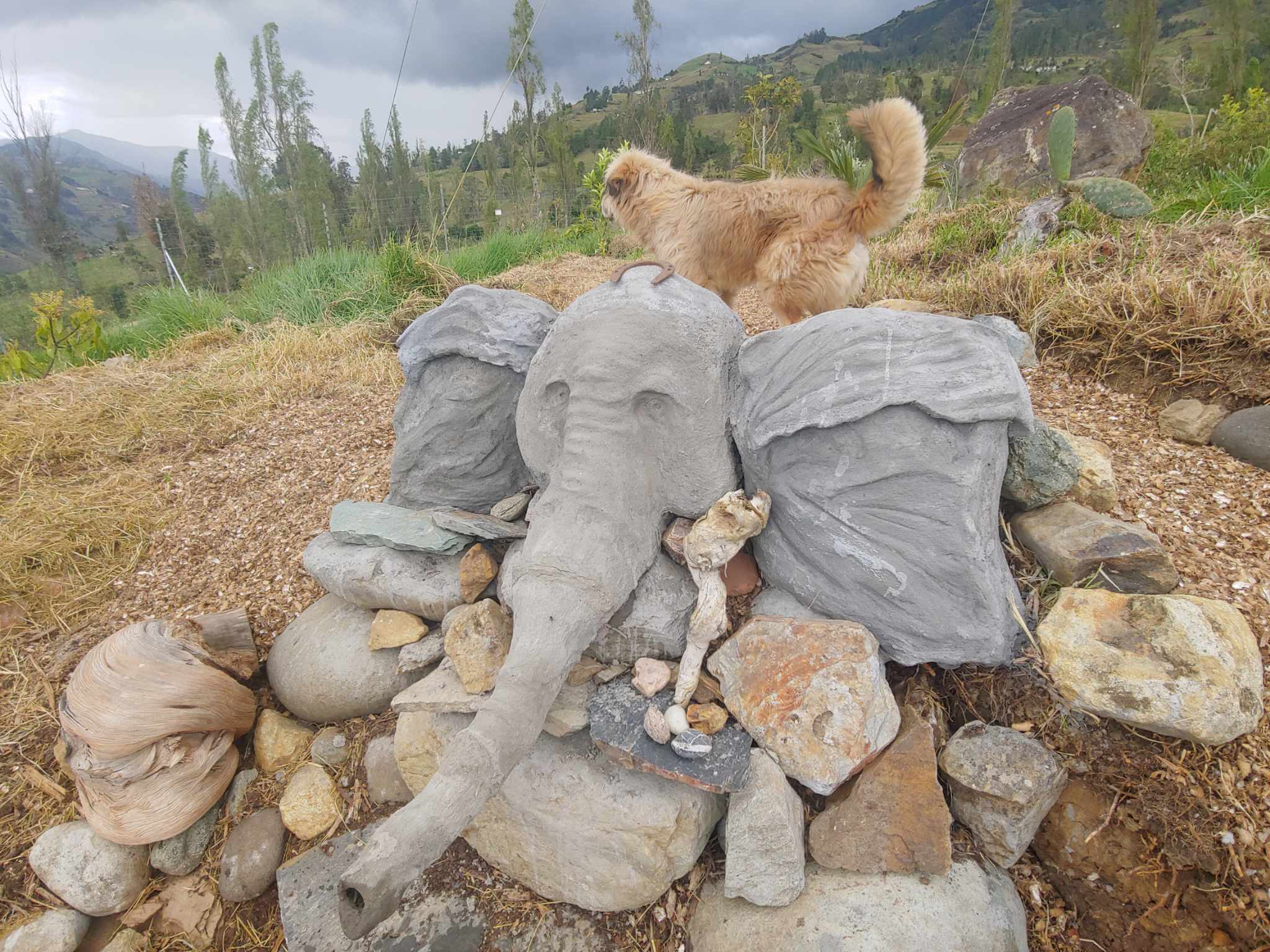
The pond system was initiated and created to teem with aquatic life and plants.   A special statue creation was made to add to the beauty of this water system.

We even added a new irrigation system, which draws water from a natural rive source.   What excites us about this work is the water can be utilized all over the property and returned to the same source (river) cleaner and healthier (and, of course) full of micorbes.   We imagine setting them off to do their restorative work down river.   This self-sustaining approach minimizes disruptions to the local ecosystem, maintaining water rich in beneficial microorganisms

Permaculture is not just about gardens and farms.    It includes all aspects of living with and mimicking Nature.    Our team even grounded the electrical system of the house for this client.   We do anticipate we will return to this property for the next phase of creating.

While our focus is the earth’s smallest yet most significant inhabitants (the microbes), our services to help clients are expanding in many ways.  Our team is growing and our mission too.